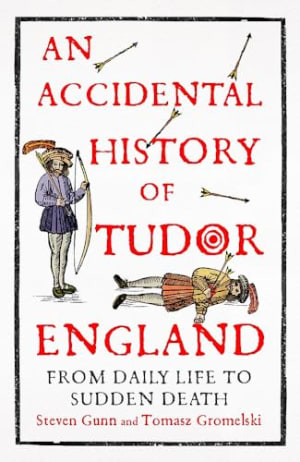
Hail-stones as big as eggs apace down fell,
And some much bigger, as I hear some tell:
Who took them up as they lay on the ground, And measured, they were found eight inches round.
~
And fourteen ounces two of them did weigh,
As one who weighed them unto me did say:
It is so strange, and yet so very true,
The like before no mortal ever knew.From “A Ballad of a Strange and Wonderful Storm of Hail which fell in London on the 18th of May 1680, which hurt several men, killed many birds and spoiled many trees; with other strange accidents, the like never before known in England.”
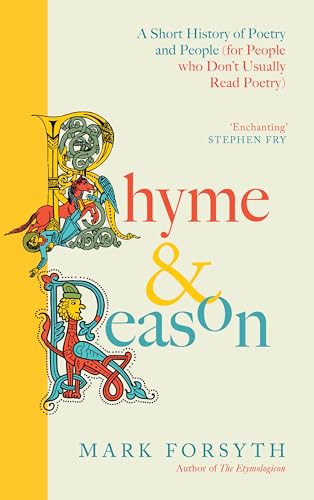
We live in a poetic desert. As Mark Forsyth observes in Rhyme and Reason: a short history of poetry and people (for people who don’t usually read poetry): nowadays we only recite poems at weddings and funerals and even then we say them wrong.
But this is an anomaly, from an historical perspective. For most of the last few hundred years poetry was an integral part of the lives of the majority of British people1. Youngsters would declaim lengthy poems by heart, grown men would weep at poetry recitals, and news reports (in the 17th century) would often be delivered in poetic form - such as the report on the freak hailstorm above which “killed many birds”.
Let's start at the very beginning
Forsyth leads us from the desert to the green pastures of the past when poetry flourished, all starting with The Book of the Duchess in 1368 which was written by a minion of the royal powerhouse John of Gaunt, named Geoffrey Chaucer, in commemoration of John’s recently deceased and much missed wife.
The poem which starts thusly:
I have gret wonder, be this lighte,
How that I live, for day ne nighte
I may nat sleepè well nigh noght,
I have so many an idle thoght
Purely for defaute of slepe
...is special for:
- Being the first poem written in English from which you can trace an unbroken line to the rest of English poetry.
- Taking a rhyming French verse structure and giving it in addition a de-dum de-dum de-dum de-dum rhythm.
There had been poems in England before this (Beowulf springs to mind) but “they didn’t lead to anything” we are told, so it was Chaucer who kicked it all off.
Poems for the ages
We are then taken step by step through the changing tastes of the English public as consumers of poetry, and the changing types of English people who consumed them.
The idea of this book is reasonably simple. In each age I try to find the typical consumer of poetry. I try to establish who they were, what class they were from, and in what precise physical circumstances they got their poems. Then I try to establish why they might have liked or disliked the poetry. Then I give you a couple of poems.
Mark Forsyth, accurately summarising his book Rhyme and Reason
One of the aims of the book is to help you (me) the reader understand how to read poems, to find the rhythm of them. In this I felt it succeeded brilliantly.
Personally I felt like I had just the right level of knowledge to get the most out of this book, which is almost total ignorance. Alongside this ignorance I’m also quite dissatisfied with my own inability to appreciate in poems what other people seem to find so special.
When you know the notes to sing
Forsyth is the perfect guide for this sort of willing ignoramus, and will often (for example) mark in bold the syllables that need stressing in a poem to get you started.
I grieve and dare not show my discontent;
I love, and yet am forced to seem to hate;
I do, yet dare not say I ever meant;
I seem stark mute, but inwardly do prate.
I am, and not; I freeze and yet am burned,
Since from myself another self I turned.Queen Elizabeth I, aged 46, whose marriage negotiations had just recently broken down.
This sort of hand holding for the reader is great and something I think should be incorporated into more poetry publications. Paradise Lost with Stressed Syllables in Bold may not become an instant best seller but you never know these days with the TikTok crowd.
Through a glass, clearly
Forsyth is also refreshingly plain speaking in how he views the poems and poets of the past, removing them from their pedestals, and bringing them down to earth.
For example when introducing us to the most popular poet by far in the eighteenth century, Lord Byron, and his first blockbuster narrative poem, title: Childe Harold, Forsyth opines as follows:
The odd thing about Childe Harold is that nothing actually happens. Childe Harold is deep and brooding and alienated, but he just looks at stuff, and moves on. The whole thing, today, feels like being shown somebody’s holiday snaps, which is a tedious business, even if the person showing you is really intense about it.
Childe Harold’s Pilgrimage is boring.Mark Forsyth, Rhyme and Reason
By making ‘great poems’ less intimidating, Forsyth makes them more accessible, and so more enjoyable.
The focus of the book is on poems that were read at the time and while this overlaps reasonably well with our current canon of "great poetry", it also surfaces more poets and poems that circulated widely in the past but have been forgotten nowadays - such as patriotic female second world war poets writing from the home front.
What I got out of the book
After I finished the book I felt I had got:
-
A history of what poems English (sometimes British) people were reciting and listening to over time - and why poetry died out in the twentieth century.
-
Light hearted but effective instructions on how to read poems, and find their rhythm.
-
A taster menu for a bunch of poems and poets for you to look up yourself later, if you want.
Anything not to like?
The best parts of this book are where the author’s personality and enthusiasm shines through.
The one or two bits that jarred with me were also where the author’s personality shines through, with an occasional “we hate the French” Dad’s Army style humour that made me cringe. But thankfully this only pops up on a few occasions.
Conclusion
The author guides you gently by the hand through the history of English poetry, and therefore a central part of English cultural history too.
If you like poetry in an abstract sense, but find it tedious and obscure in practice, Rhyme and Reason is the book for you: it succeeds in turning the commonplace into the compelling.
Presumably this is also the case for other European people too but Forsyth’s is focused on Britain (and mostly England). ↩︎
Book details
(back to top)- Title -
Rhyme and Reason : A Short History of British Poetry
- Author -
Mark Forsyth
- Publication date -
October 2025
- Publisher -
Allen & Unwin
- Pages -
368
- ISBN 13 -
9781805465287
- Amazon UK -
- Amazon US -
Next post
← New history books in Jan 2026 (and Dec 2025)
Last post
An Accidental History of Tudor England - review →